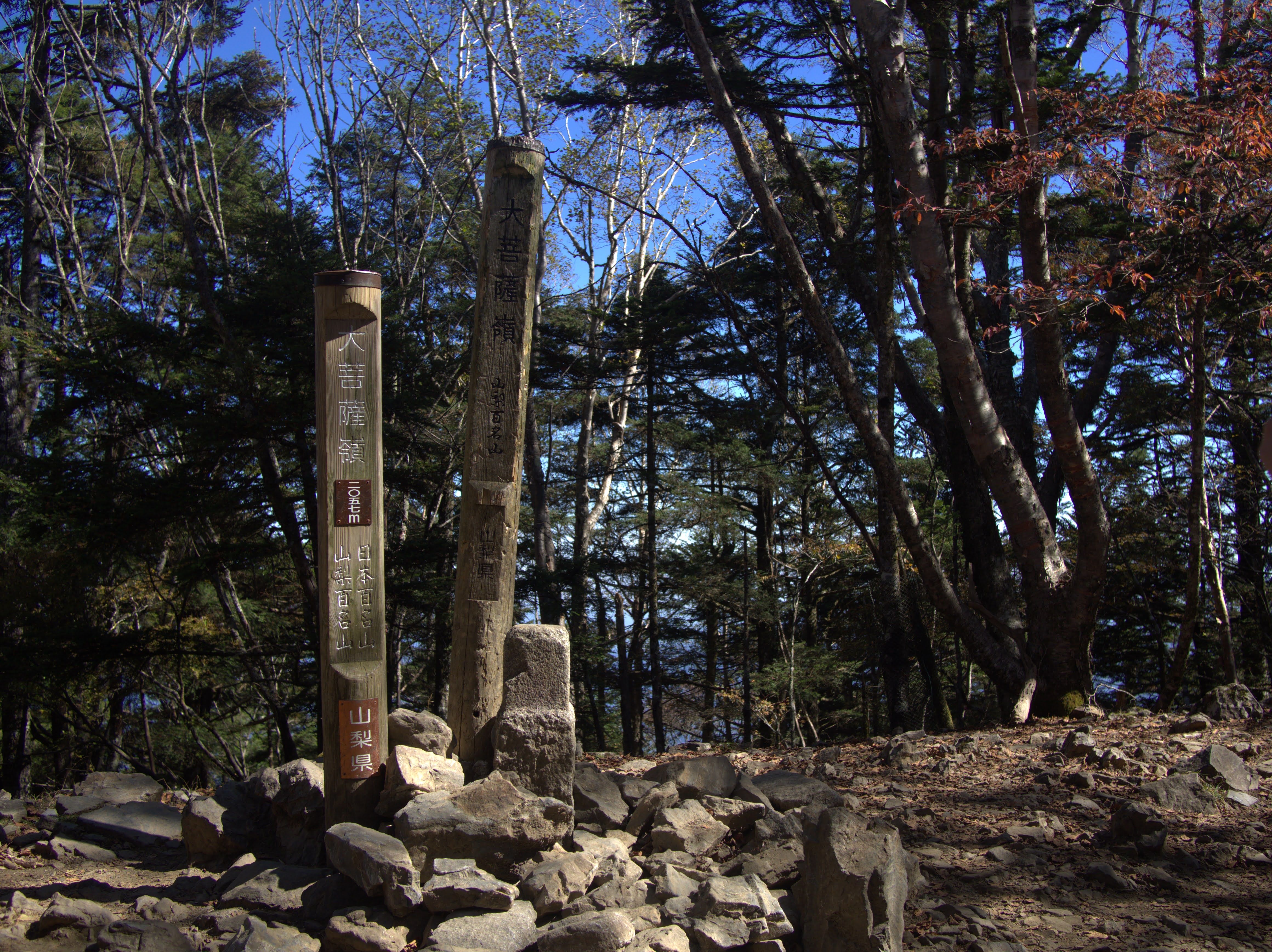
Mt. Daibosatsu
My energy and stamina no longer last the way they used to. At the very least, I no longer feel like competing on those terms. On the other hand, my experience has grown, and so have the options I have for understanding things. At work, rather than losing myself in something that feels revolutionary, I now find motivation in gradually changing the meaning of the work and discovering other sides of it. Reaching into the dynamic environmental factors through which things get done. Trying, even so, to control probabilities that lie beyond my reach. Watching words being spun among the people involved, myself included. Absorption is also proof that I can still be attached to something. But there are things that become invisible while you are absorbed.
I stepped away from screens for a while and headed to Mt. Daibosatsu with my family, carrying Gozo Yoshimasu’s What Is Poetry? The bus from the station was crowded, and we had to wait a while. That time may, if anything, have been when my agitated mind settled down. My wish to be calm, the questions from children who were bored and wanted to talk, and my own words answering them went back and forth. On the mountain trail I talked with my family, and at times simply kept walking without thought. A line from Wittgenstein that I had met in the book stayed with me: “The subject does not belong to the world; rather, it is a limit of the world.”
I had a film camera in my pochette. Like hiding a loaded revolver against my chest, I tried to catch a moment that might appear at any time. I wanted to shoot through the time in front of me and pin it down somewhere. That violent feeling and the wish to record family memories went back and forth here as well. Of course, here too, it did not go that well.
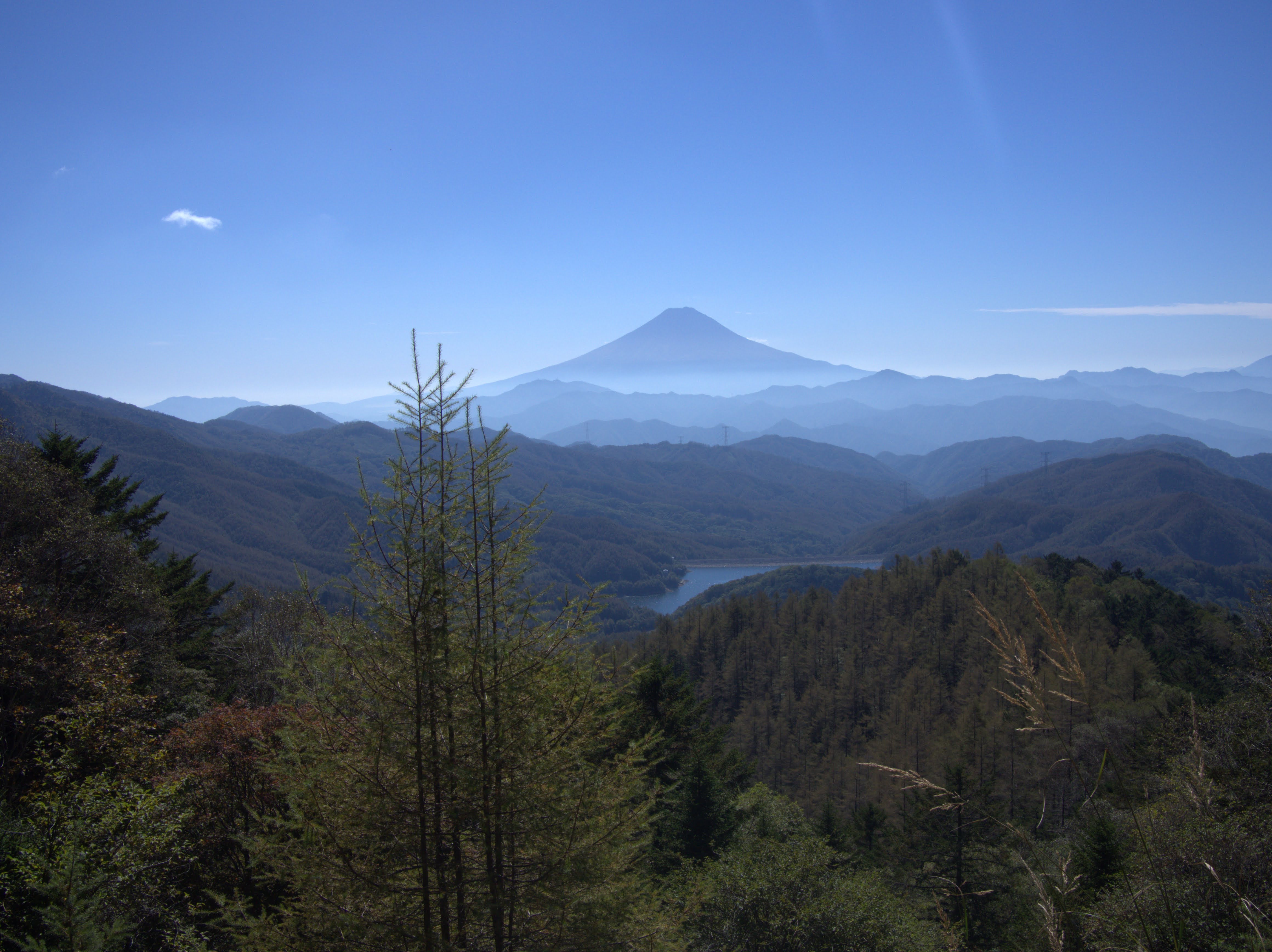
The reason I wanted to go to this mountain in the first place was that I had read Kaizan Nakazato’s novel Daibosatsu Pass. I wanted to stand with my own feet in the place where that story is set, where Ryunosuke Tsukue cuts people down. I felt this motive was not something I should tell my children, so I did not mention it until the day before. But they asked me the day before, and I ended up telling them. Their reaction was that I was saying something they did not quite understand. The actual mountain may have been too sunny for imagining the story. Thanks to that, though, Mt. Fuji was clearly visible. In the foreground, many hikers; ahead, Lake Daibosatsu; beyond it, the bluish ridgelines of the mountains; further still, Mt. Fuji. And everything else was blue sky. Looking at the layered scenery, that line came back to mind.
Conversations with my family along the way made me think about what a child is. A child is not a part of me. A child is a subject in their own right, with a will and feelings different from mine. Even so, as a parent, I take on even the feelings and attitudes that are sometimes hard to accept as matters that concern me. Taking on a subject that does not belong to me. I hope to affirm that contradiction as a belief.
On the mountain, I can get away from the daily “things I have to do.” But that blank space does not necessarily bring rest. Rather, I ended up having somewhat cruel conversations with my family, the kind I usually look away from. I wanted to refresh myself since it was a precious day off, but it did not turn out that way. Still, walking together in nature may be what made those conversations possible. It was a time in which the cruelty I had been looking away from seemed to dissolve, little by little, into myself and my family.
Perhaps I said a bit too much. Even so, I thought there might be things I would no longer be able to say if I let this moment pass. I do not know what may happen to me, either. I have lived carrying many contradictions. Without resolving them, we exchange words that logic cannot settle. Walking along the ridge that connects Mt. Daibosatsu and Daibosatsu Pass, my mind kept shifting between emptiness and sensitivity.